India's
HPV Vaccine Drive: What You Need to Know
A nationwide campaign to protect girls from cervical
cancer has finally begun
On February 28, 2026, Prime Minister Narendra Modi stood before a crowd
in Ajmer, Rajasthan, and officially launched one of the most significant public
health campaigns India has seen in years. With a single symbolic shot
administered in his presence, the government kicked off its nationwide Human
Papillomavirus (HPV) vaccination drive, targeting 14-year-old girls across
all states and Union Territories. It was a moment years in the making, and for
the millions of families it hopes to reach, it could not have come soon enough.
Cervical cancer kills roughly 80,000 women in India every year. It is the
second most common cancer among Indian women, and what makes it particularly
devastating is that it is almost entirely preventable. The vaccine exists. The
science is settled. And yet, for a long time, the protection it offered was out
of reach for most Indian families. That is now changing.
What is HPV and Why Does It Matter?
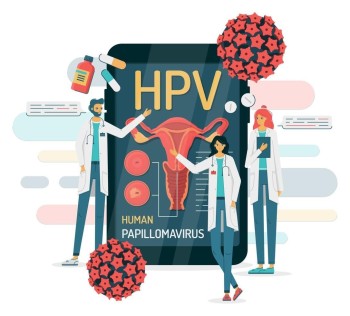
Human Papillomavirus is a group of viruses that infect the skin and
mucous membranes. It is the most common sexually transmitted infection in the
world, and most people who are sexually active will encounter it at some point
in their lives. In the majority of cases, the immune system clears it without
any lasting harm. But in some people, particularly those infected with
high-risk strains, the virus persists and can cause cells to mutate over time.
The two strains that cause the most damage are HPV types 16 and 18.
Together, they are responsible for more than 80 percent of cervical cancer cases
in India. Beyond cervical cancer, HPV is also linked to cancers of the vulva,
vagina, anus, and throat, though the cervix remains the most commonly affected
site in women.
By 2025, HPV-related cancers were projected to account for roughly 7.7
percent of all new cancer cases in India. The oropharynx is the most common
site in men, while the cervix remains the primary concern in women. The scale
of the problem, in other words, is enormous, and vaccination is the most
powerful tool available to address it.
The Vaccine: What India is Using and Why
India's national programme is using Gardasil-4, a quadrivalent
vaccine that protects against four HPV strains: types 16 and 18, which cause
cervical cancer, and types 6 and 11, which cause genital warts. The vaccine is
administered as a single dose to 14-year-old girls at government health
facilities, free of cost.
The choice of a single-dose schedule is not a compromise. It is backed by
solid science. In June 2022, the World Health Organization's Strategic
Advisory Group of Experts on Immunization concluded that a single dose offers
protection comparable to a two-dose schedule for girls aged 9 to 20 years. The
December 2022 WHO position paper further endorsed this approach, and 90
countries worldwide have now adopted it. India's decision aligns with global
best practice.
The vaccine's effectiveness figures are striking. Studies show that HPV
vaccines are 93 to 100 percent effective at preventing cervical cancer caused
by the strains they target. More than 500 million doses have been administered
globally since 2006, making it one of the most extensively studied vaccines in
modern medicine. Its safety record is well established.
It is worth noting that India already has other HPV vaccines available in
the private market. Cervarix is a bivalent vaccine protecting against
types 16 and 18, while Gardasil-9 (nonavalent) covers nine strains.
There is also Cervavac, a quadrivalent vaccine developed domestically by
the Serum Institute of India, which has been available in private
hospitals at up to Rs 4,000 per dose. The government's free public campaign now
gives every 14-year-old girl access to this protection, regardless of her
family's income.
A Long Road to Launch
The push toward a national HPV vaccination programme did not happen
overnight. India's apex immunisation body, the National Technical Advisory
Group on Immunisation (NTAGI), recommended the vaccine's inclusion in the Universal
Immunisation Programme back in June 2022, with a follow-up recommendation
in July 2023. In January 2023, the Ministry of Health and Family Welfare
began reaching out to seven state governments to prepare for a phased rollout
targeting girls aged 9 to 14 years.
The political signal came in the Union Budget 2024, when Finance Minister
Nirmala Sitharaman explicitly mentioned encouraging vaccination for girls aged
9 to 14 against cervical cancer. PM Modi also referenced the initiative during
the Quad Cancer Moonshot summit in September 2024. The groundwork was
being laid steadily, even as the formal launch remained pending.
Under a partnership with GAVI, the Vaccine Alliance, India secured
2.6 crore doses of Gardasil, with around 1.5 crore doses already delivered by
the time of the launch. States were trained, cold chain logistics were put in
place, and communication campaigns were developed to reduce hesitancy. The
initiative was clearly treated as a serious operational undertaking, not just a
policy announcement.
How the Campaign Works
The initial phase runs as a special campaign over three months, or 90
days, in mission mode. During this window, eligible girls can walk into a
designated government health facility any day and receive the vaccine. After
the campaign phase concludes, the vaccine will be available on routine
immunisation session days.
Vaccination sites include Ayushman Arogya Mandirs (primary health
centres), community health centres, sub-district and district hospitals, and
government medical colleges. Participation is voluntary, and parental or
guardian consent is required before a girl receives the dose.
The target group is precisely defined: girls who have completed 14 years
of age but have not yet turned 15. According to Registrar General of India
estimates, this cohort consists of approximately 1.2 crore girls annually
across the country. Progress is being tracked through the U-WIN digital
platform to ensure accountability and coverage monitoring.
In the longer run, the programme is projected to cover 68 million Indian
girls in a phased rollout, after which approximately 11.2 million 9-year-old
girls will be targeted each year as part of routine vaccination.
The Challenges Ahead
Launching the programme is the beginning, not the end. Experts have
flagged several challenges that will determine how effective the campaign truly
turns out to be.
Vaccine hesitancy remains a real concern. In parts of India,
conversations about HPV vaccination can brush up against discomfort around the
topic of sexual health, even when the framing is entirely about cancer
prevention. Getting communities to understand that this is a cancer vaccine,
not a judgement of lifestyle, will require sustained, thoughtful communication
from health workers, schools, and community leaders.
Access and socioeconomic barriers are another factor. While the vaccine
is free, reaching girls in rural areas and ensuring cold chain integrity across
diverse geographies is a logistical challenge India's health system knows well.
The fact that states have already been trained and workshops conducted
throughout 2023 is encouraging, but execution at scale will test those
preparations.
There is also the question of scope. The current programme covers only
14-year-old girls. Experts, including those who authored India's NTAGI
recommendations, have discussed whether gender-neutral vaccination, extending
coverage to boys and older adolescents, should eventually be pursued. HPV
affects people of all genders, and evidence suggests that vaccinating boys
alongside girls strengthens herd immunity and reduces transmission overall.
Where India Stands Globally
With this launch, India joins over 160 countries that have incorporated
HPV vaccination into their national immunisation schedules. As of December
2025, 159 countries covering 82 percent of the world had introduced HPV
vaccines. India's entry into this group is significant given that it carries
one of the world's largest shares of cervical cancer burden.
The World Health Organization has set ambitious global targets for
2030: 90 percent of girls fully vaccinated with the HPV vaccine by age 15, 70
percent of women screened with a high-performance test by age 35 and again by
45, and 90 percent of women with cervical disease receiving treatment. India's
programme is a critical piece of the first target.
A Vaccine Worth Taking Seriously
The HPV vaccine is not experimental or controversial in any scientific
sense. It is backed by nearly two decades of data, over half a billion doses
administered worldwide, and consistent endorsement from every major health
authority on the planet. The only real debate left is about how to reach every
girl who stands to benefit from it.
For India, a country where a woman dies of cervical cancer roughly every
few minutes, the stakes of that logistical challenge could not be higher. The
launch in Ajmer marks a genuine turning point. Whether it translates into
meaningful protection for millions of girls will depend on how seriously
states, health workers, schools, and families take the next 90 days and the
years that follow.
If done right, this campaign will one day be looked back on as the
moment India began winning its long, overdue fight against a cancer it always
had the power to prevent.
Sources: PIB Government of India, WHO GLOBOCAN 2022, NTAGI
recommendations, PMC peer-reviewed research, Drishti IAS, Business Standard.
Published March 2026.